Dental and oral care is often overlooked in bulldogs, yet it plays a major role in their overall health. Due to their short snouts, crowded teeth, and strong jaws, bulldogs are especially prone to plaque buildup, gum disease, and bad breath.
In this guide, you’ll learn everything you need to know about bulldog dental and oral care, including brushing techniques, helpful products, and signs of dental problems to watch for.
🦷 Why Dental Care Is Important for Bulldogs
Bulldogs are at higher risk of oral health issues because:
- Teeth are crowded in a short jaw
- Food easily gets trapped
- Plaque builds up quickly
- Gum disease can develop early
Poor oral health doesn’t just affect the mouth—it can impact the heart, kidneys, and overall wellbeing.
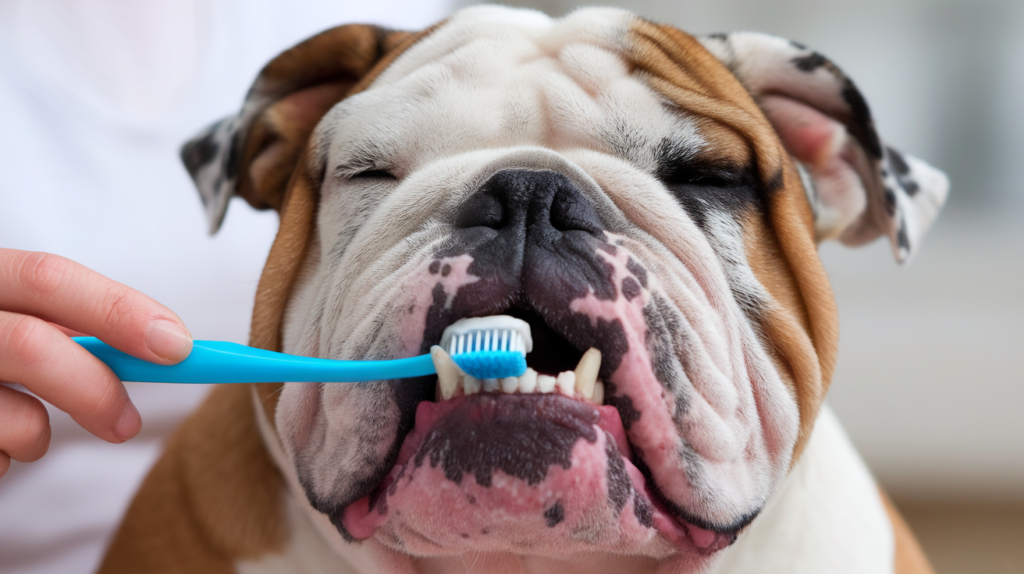
🪥 How to Brush a Bulldog’s Teeth Properly
Step 1: Choose the Right Tools
Use:
- Dog-specific toothpaste (never human toothpaste)
- Soft dog toothbrush or finger brush
Step 2: Start Slowly
Let your bulldog:
- Smell the toothpaste
- Lick a small amount
- Get used to the brush
Patience builds trust and makes brushing easier.
Step 3: Brush Gently
- Focus on the outer surfaces of the teeth
- Use gentle circular motions
- Pay extra attention to the back molars
Step 4: Keep It Short and Positive
- 30–60 seconds is enough
- Praise and reward afterward
⏰ How Often Should You Brush Bulldog Teeth?
- Daily brushing: ideal
- 3–4 times per week: minimum recommended
Consistency is far more important than duration.
🦴 Dental Chews & Treats for Bulldogs
Dental chews can support oral hygiene when used correctly.
✔ What to Look For
- Bulldog-friendly size and shape
- Softer texture to prevent tooth damage
- Low-calorie formulas
⚠️ Important Note
Dental chews are not a replacement for brushing—they are a supplement.
💊 Dental Supplements & Water Additives
Helpful options include:
- Water additives that reduce bacteria
- Oral sprays or gels
- Probiotics for oral health
Always choose products formulated specifically for dogs.
🚫 Common Dental Problems in Bulldogs
Bulldog owners should watch for:
- Bad breath
- Red or bleeding gums
- Yellow or brown plaque
- Difficulty chewing
- Pawing at the mouth
Early detection prevents painful and costly dental procedures.
🏥 When to See a Veterinarian
Schedule a vet visit if you notice:
- Persistent bad breath
- Swollen gums
- Loose or broken teeth
- Behavioral changes related to eating
Professional cleanings may be necessary, especially for adult and senior bulldogs.
❤️ Signs of Good Oral Health in Bulldogs
Healthy bulldog mouths show:
- Clean teeth with minimal plaque
- Pink, firm gums
- Comfortable chewing
- Fresh or neutral breath